

For decades, PID (Proportional-Integral-Derivative) control has served as the cornerstone of industrial automation. Its simplicity, reliability, and wide applicability have made it the default control logic for oil and gas systems ranging from flow and pressure to level and temperature. However, the industry’s increasing complexity, demand for operational efficiency, and need for tighter control margins are exposing the limitations of PID loops—particularly in dynamic or nonlinear environments. As a result, engineers and operators are beginning to embrace more advanced, flexible control strategies that go beyond traditional tuning.
The challenge with PID lies in its fundamental design. It performs well in predictable, linear systems but struggles with processes that have multiple interacting variables, fast-changing conditions, or nonlinear responses. In many real-world scenarios—such as compressor anti-surge control, multi-phase separation, or column temperature balancing—PID loops require frequent manual tuning and often force operators to make compromises between speed and stability. This can lead to inefficiencies, energy waste, and even safety concerns in sensitive applications.
To overcome these issues, many operators are integrating model-based control strategies like Model Predictive Control (MPC) or adopting adaptive logic that adjusts in real time. Unlike PID, which reacts to error after it occurs, MPC anticipates changes based on a dynamic model of the process and proactively adjusts outputs. This makes it particularly effective in managing multivariable systems with constraints, such as pressure and flow coordination across a gas plant. Adaptive control systems take a slightly different approach by continuously recalibrating control parameters as the system evolves. This ensures optimal performance over time without requiring manual retuning—a valuable capability when dealing with seasonal variation, equipment wear, or changing feedstocks.
Rather than replacing PID entirely, many facilities are now layering it within a broader control hierarchy. Basic loop control remains at the foundation, but it is supervised and optimized by higher-level logic that leverages data and predictive modeling. In modern control system architecture, PID loops function at the device level, while supervisory control platforms like PLCs and DCSs provide coordination, interlocks, and safety logic. Above that, advanced applications like MPC, analytics platforms, and AI engines optimize setpoints, minimize variability, and even predict failures before they occur. This layered approach allows operators to preserve the robustness of PID while gaining the intelligence needed to compete in a data-driven environment.
Modern control platforms such as Emerson DeltaV, Honeywell Experion, Siemens PCS7, and Yokogawa Centum already support these hybrid strategies. They offer embedded MPC modules, batch sequencing, and logic builders that allow engineers to implement sophisticated control without extensive custom coding. Meanwhile, edge devices with AI capabilities are becoming more common. These controllers can learn from historical data, recognize abnormal patterns, and provide operators with real-time recommendations or alerts. In some cases, they can even take action autonomously, adjusting parameters or switching between modes based on process conditions.
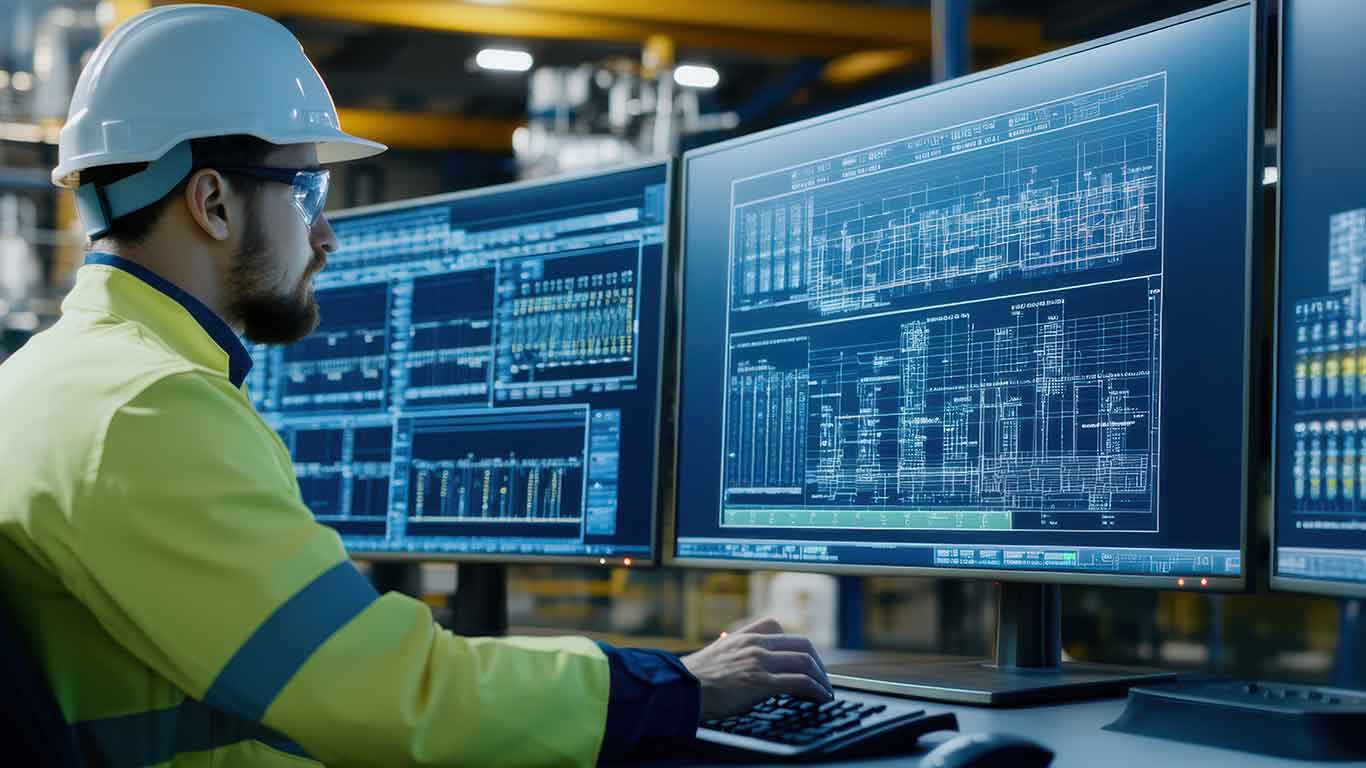
This shift in control philosophy is also reshaping the role of the operator. Instead of continuously monitoring and tweaking loops, today’s operators are increasingly focused on system oversight, diagnostics, and decision-making. They must understand how higher-level control strategies work, how to interpret advanced dashboards, and how to respond when systems behave outside expected bounds. This requires not only training but also well-designed human-machine interfaces (HMIs) that clearly present control logic, trends, and alerts. It’s no longer enough for operators to know how to adjust a setpoint—they must also understand the context behind that adjustment and evaluate whether the system is optimizing itself correctly.
In the modern oil and gas landscape, automation isn’t just about removing manual effort—it’s about making control systems smarter, more responsive, and more integrated with business goals. As plants aim for higher uptime, tighter emissions control, and reduced energy consumption, moving beyond PID is becoming less of a luxury and more of a necessity. The tools are available, the architectures are maturing, and the benefits are proven. It’s now a question of adoption and execution.