
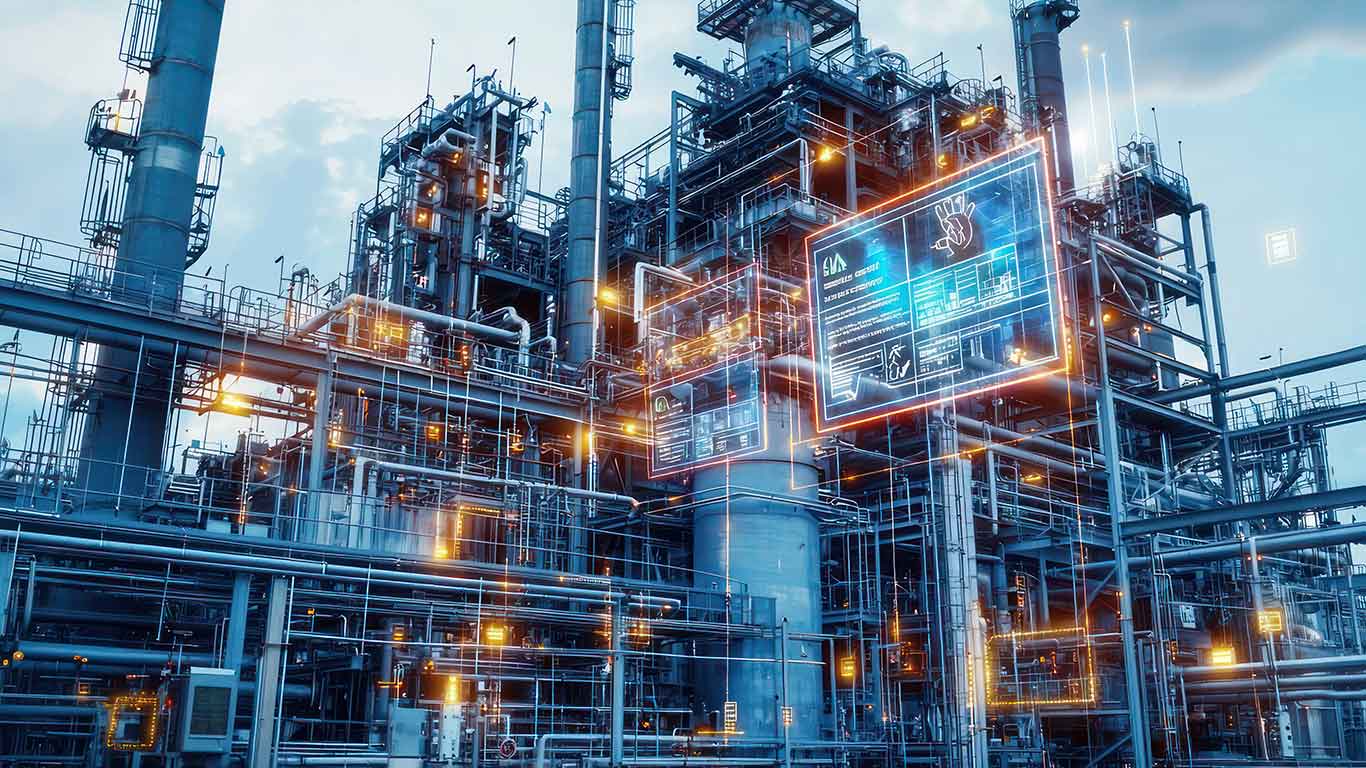

Automation has long been a cornerstone of industrial operations, but its role in oil and gas is undergoing a major transformation. What once focused on basic process control and efficiency has expanded into a comprehensive strategy for safety, scalability, and real-time intelligence. As operational demands grow more complex and the need for agility intensifies, automation is helping facilities gain deeper visibility, tighter control, and better decision-making from the wellhead to the refinery.
At its foundation, automation involves the orchestration of software and hardware to monitor and manage systems with minimal manual intervention. It ensures consistency, minimizes downtime, and supports optimal performance across upstream, midstream, and downstream operations. Whether enabling remote artificial lift control, optimizing refinery throughput, or regulating pipeline pressure, automated systems are central to modern infrastructure.
Distributed Control Systems (DCS) and Programmable Logic Controllers (PLC) remain the workhorses of this evolution. These platforms provide centralized, programmable oversight of critical operations and are increasingly paired with Human-Machine Interfaces (HMI) to present live data, alarms, and trends in an intuitive, actionable format. As control systems grow more modular and scalable, facilities are finding it easier to integrate legacy equipment, improve system redundancy, and maintain cybersecurity standards.
Advancements in edge computing and the Industrial Internet of Things (IIoT) are taking automation further. Edge-enabled controllers can process data locally and act instantly on operational insights, minimizing latency and enabling autonomous decision-making—even in remote or bandwidth-limited sites. Wireless instrumentation, cloud-based SCADA, and real-time analytics tools are reshaping how oil and gas professionals operate, especially in areas where sending personnel is difficult or dangerous.
Maintenance and reliability strategies are also being transformed. Automation enables predictive monitoring using sensor data and historical trends, allowing operators to identify problems before failures occur. By adopting a condition-based maintenance model, companies can reduce unscheduled downtime, extend equipment life, and optimize labor allocation. Smart sensors, vibration monitors, and thermographic tools all contribute to this shift—giving teams data they can act on without guesswork.
Process optimization is another area where automation is delivering measurable gains. Advanced Process Control (APC) and Model Predictive Control (MPC) technologies are enabling tighter regulation of temperature, flow, pressure, and chemical reactions in real time. These systems use predictive models and control algorithms to continuously adjust setpoints, ensuring efficient, high-quality production while reducing energy consumption and emissions. As regulations become more stringent, these tools offer a clear path toward compliance and sustainability.
Safety has always been a priority in oil and gas—and automation plays a crucial role in protecting personnel and infrastructure. Safety Instrumented Systems (SIS), automated shutdown valves, fire detection controls, and gas leak monitoring networks now operate as part of integrated safety layers. When these systems are tightly integrated with core automation platforms, they respond faster and more effectively than human operators could—isolating hazards or initiating evacuations in real time.
This growing sophistication in automation is redefining the skills required of today’s workforce. Operators and technicians now work alongside digital systems and must understand network protocols, sensor diagnostics, and cybersecurity measures. Simulation environments, digital twins, and interactive training programs are equipping teams with the knowledge needed to navigate a highly automated, data-driven environment.
Looking ahead, artificial intelligence and machine learning will continue to shape the future of automation in the energy sector. Early implementations are already being used to optimize production rates, detect anomalies, and recommend operational adjustments. Autonomous drilling, remote robotic inspections, and AI-driven forecasting will further accelerate this evolution—transforming not just how we operate, but how we plan and innovate.