
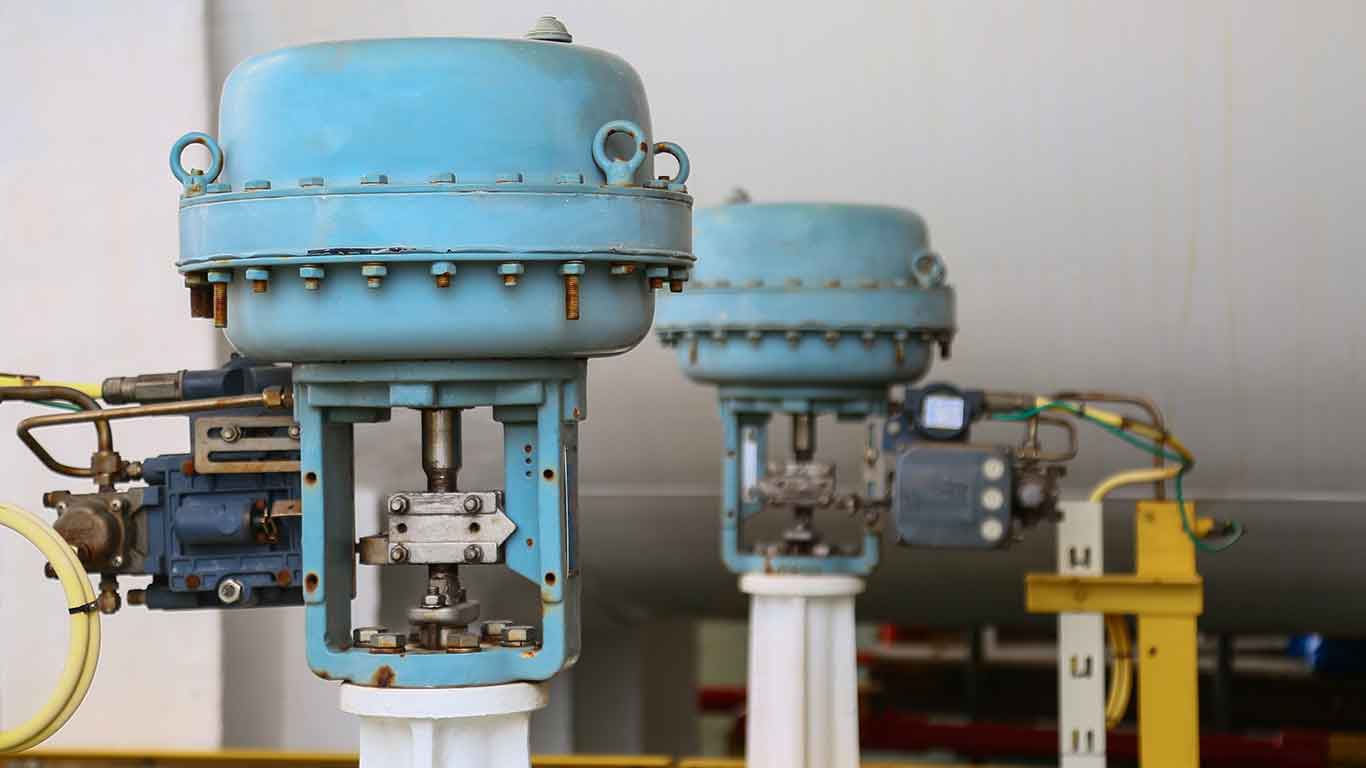

As oil and gas operations increasingly shift toward automation, remote monitoring, and intelligent infrastructure, the demand for actuated valves has never been greater. Unlike manual valves, which require on-site operation, actuated valves use electric, pneumatic, or hydraulic mechanisms to open, close, or modulate flow based on control system commands—making them essential for high-reliability systems and hard-to-reach installations. From upstream well pads to downstream refining units, actuated valves play a critical role in safety, efficiency, and responsiveness.
Actuated valves are particularly important in applications where quick and reliable action is essential. Emergency shutdown (ESD) systems, for example, rely on actuated valves to isolate lines in milliseconds during pressure surges, gas leaks, or fire conditions. Similarly, control valves with electric or pneumatic actuators provide smooth modulation for temperature, pressure, or flow loops, ensuring process stability even under fluctuating load conditions. In many of these scenarios, the reliability and speed of the actuator can mean the difference between a safe event and a costly incident.
Choosing the right actuator—electric, pneumatic, or hydraulic—depends on the application. Pneumatic actuators are lightweight, fast-acting, and commonly used in hazardous areas due to their non-electrical operation. Electric actuators offer precise control and easy integration with digital networks, but require power sources and often include motor controls and torque limiters. Hydraulic actuators, on the other hand, are preferred in high-force or subsea environments, where brute strength and rugged design are essential. Each actuator type brings distinct advantages and must be paired carefully with the right valve, control logic, and environmental considerations.
In today’s digital landscape, the line between valve and control system is blurring. Smart actuators equipped with onboard diagnostics, position feedback, and digital communication protocols like HART, Profibus, or Modbus are helping operators gain real-time insight into valve position, stroke speed, torque demand, and operational history. This enables predictive maintenance, faster troubleshooting, and seamless integration with asset management systems—reducing downtime and preventing unplanned failures.
One of the most significant trends in valve actuation is the move toward fully automated valve networks in remote or unmanned facilities. In shale operations, for instance, automated valve skids allow operators to start, stop, and adjust flows from centralized control rooms—reducing travel time, improving safety, and ensuring more consistent well performance. These systems also allow for alarm-based decision-making, where a pressure or temperature deviation triggers an automated valve response to maintain system stability or shut down the line for safety.
However, actuated valves aren’t set-and-forget devices. They require careful setup, calibration, and ongoing validation. Improper torque settings, sluggish response times, or misaligned travel stops can lead to performance issues that are difficult to diagnose without the right tools. That’s why commissioning procedures, digital setup wizards, and routine partial stroke testing are now standard in many facilities.
Cost remains a factor, especially in brownfield upgrades or in smaller plants. But thanks to the modular nature of many modern actuators, facilities can often retrofit legacy valves with smart actuation systems without replacing the entire assembly. This helps operators achieve incremental modernization while maintaining budget discipline.
Looking ahead, the integration of actuated valves with edge computing and machine learning is poised to take automation to a new level. Systems will be able to anticipate demand changes, detect anomalies, and self-optimize valve performance without operator intervention. For safety-critical applications, real-time verification and automated fail-safes will provide additional layers of reliability.